Toward Trustworthy Systems
Field notes from a social impact incubator

My older brother Anand died in India before I was born. I learned the details around his death only some 25 years later, because my mom didn’t want to revisit those painful memories. Like so many infant deaths, Anand’s was avoidable.
When the doctor came to my grandparents’ home, he dismissed my mom’s concerns. He spoke only to my grandfather, ignoring both the baby and my mom—the one who knew Anand best.
What was the impact of not listening? Not only was it disrespectful, it led to a missed diagnosis, and ultimately cost Anand his life. Not listening also had a longer-lasting effect. To this day, my mom is distrustful of the medical system, refusing vaccines and preventive screening, even though two of her children are doctors.
This story is not rare. When systems fail to acknowledge people, the harm ripples beyond the moment. A system that denies our worth cannot earn trust.
A Crisis of Trust
Across geographies and sectors, systems are losing the trust of the people they’re meant to serve. The harder they push for scale through metrics, standardization, and technology, the faster trust erodes.
This is not a technocratic failure. It is a moral one. My family’s story is one instance of this broader failure, but versions of it play out daily in healthcare, education, housing, workplaces, and democratic life.
The question that has been occupying me is simple: What would it take to rebuild trust in the systems that shape our collective lives?
The Foundations of Trust
Across faith traditions, political philosophies, and scientific accounts of human development, three values consistently surface as essential: dignity, compassion, and agency.
These are not just ideals to aspire to—they are human capacities that can be cultivated in individuals, practiced in relationships, and built into institutions. Each expresses both an inner dimension—self-worth, self-care, self-efficacy—and a relational one: honoring another’s worth, extending care to people and planet, and sharing power inclusively.
Following these values outward—from self to society—clarifies why they matter so deeply. They are goals in themselves. They drive system performance. And they are the threads that tie us together. This is the deeper logic beneath trust.
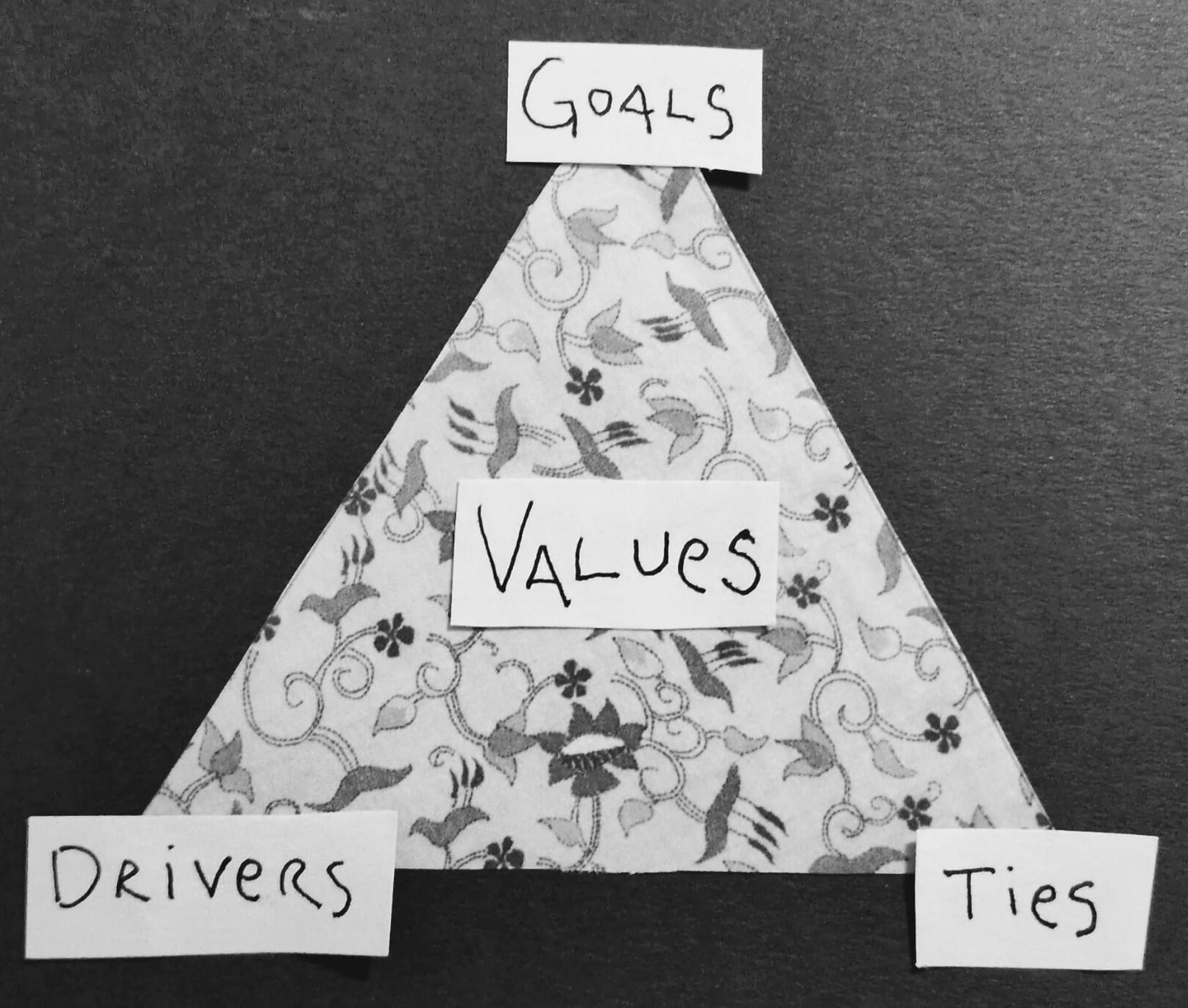
Values as goals
We invoke dignity, compassion, and agency often—in mission statements, sermons, political speeches. But when it comes to the actual work of system-building, they tend to vanish. They do not appear in budget line items, accountability frameworks, or definitions of success. In most institutions, these values live in the preamble, not the plan.
Values resist easy quantification, which makes them hard to name as goals. And they are harder still to practice: they demand inner work, the sensitivity and patience to listen and respond to people as full human beings, and the creativity and courage to challenge and reimagine institutions. That difficulty helps explain what we have neglected—and what is now most worth taking on. If we cherish these values, we have to name them. Design for them. Practice them. Build them in.
Example: The Agency Fund is a collaborative philanthropic initiative that emerged from an observation that global development remains oriented toward meeting physiological needs—food, shelter, survival—often assuming, following Maslow, that other needs matter only after these are secured. The Fund challenges this sequencing. It treats agency as a social good in its own right, as fundamental as literacy or numeracy.
One project the Fund supported illustrates what it can mean to take that commitment seriously. In rural Niger, researchers worked with women participating in a poverty-reduction program to understand how agency manifested in their lives. Rather than centering the individualist models common in Western psychology, women described agency in relational terms: earning respect, maintaining social harmony, and contributing to family and community. Taking these local models seriously made it possible to define agency in a way that was culturally wiser, and to design an intervention grounded in agency as the women themselves understood it.
Values as drivers
A growing body of evidence suggests that systems built on dignity, compassion, and agency don’t just feel better—they perform better. (See Further reading for a glimpse into this evidence.)
In healthcare, compassionate, dignity-affirming, and agency-supportive care is associated with better patient outcomes, stronger adherence and self-management, higher satisfaction and trust, and, in some cases, lower costs and lower provider burnout.
In education, when students feel they belong, when teachers support their agency, and when classrooms are grounded in care and respect, learning outcomes improve—sometimes dramatically. Belonging boosts achievement. Autonomy-supportive teaching increases motivation and persistence. Caring classrooms strengthen engagement.
In economic mobility, the evidence is clearest around agency. Programs that expand people’s decision-making power—cash transfers, unconditional subsidies, flexible financing—consistently outperform tightly scripted, compliance-heavy interventions. When people control how resources are used, they invest more effectively, experience greater income gains, and report higher well-being.
The pattern is consistent: when institutions honor people’s humanity, people participate more fully—and outcomes improve.
Example: In healthcare, GDI-incubated Leapfrog to Value redesigns systems around patient dignity, compassion, and agency. In diseases like TB and HIV—often treated through compliance-heavy models that assume patients cannot be trusted—care is oriented around surveillance rather than partnership. Leapfrog to Value asks what happens when patients are treated not as risks to be managed but as capable agents in their own care. Early work suggests that when people feel seen and trusted, adherence improves and care becomes more effective, often at lower long-term cost. By generating credible evidence on outcomes and cost, Leapfrog to Value positions compassion to function as a driver of system performance—creating the conditions for public and private financing to adopt and scale more humane models of care.
Values as ties
Democracies depend not only on rules, elections, or institutions, but on a shared sense of us.
When compassion is present, people extend care beyond their immediate circles. When dignity is upheld, those on the margins feel recognized rather than erased or threatened. When agency is supported, people experience the democratic project as inclusive—one in which their voice matters and their participation counts.
Together, these capacities generate social trust. Where trust in one another and in institutions is high, cooperation is stronger, communities are more resilient, conflict is lower, and democratic life is more stable. These are not soft or secondary virtues. They are foundational to democratic life.
Example: The Dignity Restoration Project, also incubated at GDI, tests whether racial repair can strengthen trust, belonging, and democratic cohesion where public systems have caused harm. It focuses on communities in Detroit affected by predatory property tax practices, where residents were systematically overtaxed, lost their homes, and were blamed rather than acknowledged as wronged by the state. The project advances a model of repair that includes acknowledgment and apology, material compensation, structural change, and meaningful participation by affected residents. By centering agency—Detroiters help shape how repair and storytelling happen—it asks whether restoring dignity at the individual level can also rebuild trust in public institutions and strengthen social cohesion.
The work ahead
This line of inquiry has led us to begin incubating a portfolio of initiatives at GDI centered on dignity, compassion, and agency.
We are interested in efforts that treat these capacities not only as values to name, but as design requirements—visible in practice, embedded in policy, and real in people’s lives. Especially in places where legitimacy is fraying, we are curious about bold experiments to restore trust.
This work is emergent—we do not yet know all the forms it should take. If you are developing an idea that resonates with this framing, we would love to learn from you. If you are an entrepreneur building systems that honor dignity, compassion, and agency, we want to hear from you. And if you are a funder interested in investing in trust, we are eager to explore what co-investment and partnership could look like.
This newsletter is a place to think in public about these questions—to notice where trust is breaking down, to explore what repair might require, and to imagine systems worthy of the people they serve.
Further reading—and an invitation to expand it
The readings below are entry points into the evidence base behind the claims in this essay. They reflect where much formal research has been produced—largely within academic traditions of the Global North—and therefore the limits of how knowledge is typically recognized.
Part of the work ahead is expanding what counts as evidence, and whose ways of knowing shape how we design systems. I’m especially interested in work rooted in the Global South, Indigenous traditions, spiritual lineages, and practitioner wisdom. If you have recommendations that stretch this list, please share. I would genuinely love to learn from them.
Values as Drivers
Healthcare: Compassionomics (Mazzarelli + Trzeciak) synthesizes 200+ studies demonstrating that compassionate, relationship-centered care is associated with improved clinical outcomes, stronger patient adherence and self-management, higher trust and satisfaction, lower unnecessary utilization, and reduced clinician burnout.
Education: Visible Learning (Hattie) synthesizes hundreds of meta-analyses, showing that some of the strongest drivers of learning are relational rather than technical: strong teacher-student relationships, supportive classroom climate, clear expectations, and student agency.
Economic Mobility: Poor Economics (Banerjee + Duflo) synthesizes decades of randomized evaluations across low- and middle-income countries, showing that economic mobility improves when people have real agency over decisions affecting their lives. The authors document how programs that expand choice lead to stronger investment, higher earnings, and better long-term outcomes.
Values as glue
The Upswing (Putnam + Garrett) synthesizes decades of social and political data to show that democratic stability depends on social trust, shared identity, and civic inclusion. The authors document how declines in mutuality and institutional legitimacy fuel polarization and democratic fragility—and how rebuilding a sense of shared us is essential to democratic renewal.